Leopardstown Christmas Festival 2026: Dates, Races and Betting Guide
Leopardstown Christmas Festival 2026 dates, key races, Savills Chase, Paddy Power Chase, form, each-way bets and non-runner rules in Ireland.

Key Takeaways
- The festival runs from 26 to 29 December 2026, and Monday's Savills Chase and Christmas Hurdle are the big staying races (the longer-distance ones).
- Sunday's Paddy Power Chase is a big-field handicap (a race where horses carry different weights), so it needs a different approach from the Grade 1 races, particularly when you look at the weights and each-way terms.
- You can get early prices before the final declarations, but the runners, the going and the place terms can all still change. Those details matter more than picking a horse too early.
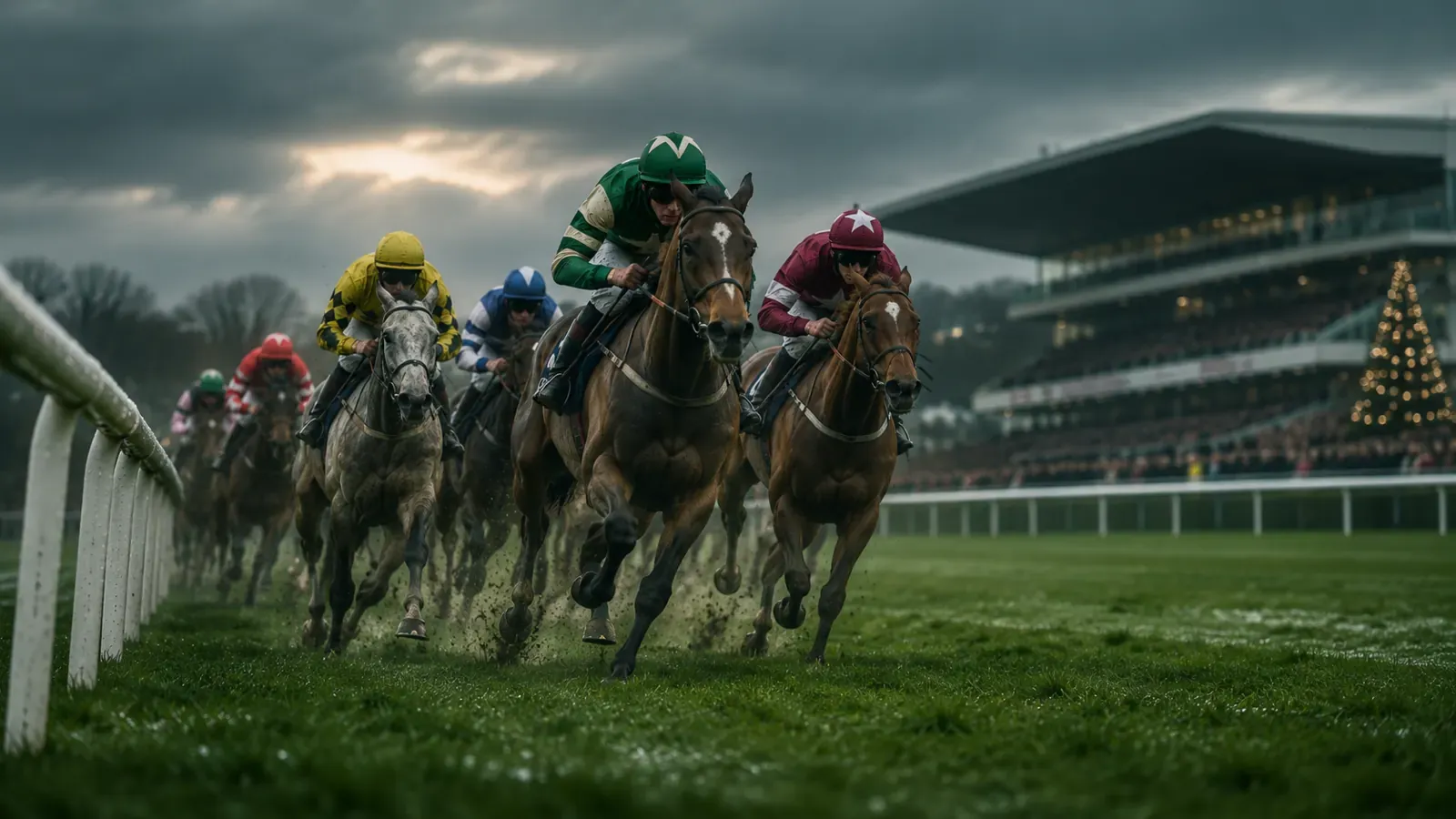
Leopardstown's Christmas Festival runs from Saturday 26 to Tuesday 29 December 2026, four straight days of National Hunt (jump) racing in Dublin. The Savills Chase on Monday is the headline race, but Sunday is where it gets interesting, because the big-field Paddy Power Chase comes with very different betting conditions.
The point isn't to pick a horse six weeks early and hope for the best. A three-mile Grade 1 chase, a crowded handicap and a two-mile hurdle ask different things of their runners. Knowing which race you're looking at, and what can still change before it starts, is what actually helps.
The four festival days and their main races
Here's how Leopardstown's published 2026 programme lays out the major races. The times are provisional, so check them against the final card closer to Christmas.
Saturday 26 December: Racing Post Chase Day
The Grade 1 Racing Post Novice Steeplechase is scheduled for 2.20pm, and there's a juvenile hurdle (a race for young horses) on the card too. A novice chase is for horses still learning to jump fences, so clean jumping and how a horse handled its last chase start count for more than a name you recognise from hurdle races.
Sunday 27 December: Paddy Power Chase Day
The Paddy Power Chase is scheduled for 3pm, over roughly three miles. The day also features the Future Champions Novice Hurdle, a hurdle for developing horses, and Paddy's Rewards Club Chase, a shorter, high-class chase. But the Paddy Power Chase is the one to dig into, because it's a handicap and that makes the weights and each-way terms matter a lot more.
Monday 28 December: Savills Chase Day
The Christmas Hurdle is listed for 1.55pm and the Grade 1 Savills Chase for 2.30pm. Both test stamina over roughly three miles, though hurdling and jumping fences are different skills. If you only follow one afternoon, make it Monday, because it's the best concentrated look at proven staying horses.
Tuesday 29 December: December Hurdle Day
The Grade 1 December Hurdle is scheduled for 2.32pm. It's run at around two miles, so speed and hurdling rhythm count for more than they do in Monday's staying races. The final day also has the Irish EBF Mares Hurdle and wraps up the four-day meeting.
Why the Savills Chase and Paddy Power Chase are different bets
The Savills Chase is a Grade 1, so it's all about top-level form and whether a horse can race against the best. The Paddy Power Chase is a handicap: horses carry different weights based on their ratings, which is meant to give runners of different abilities a fairer shot at winning.
Last Christmas showed how much that distinction matters. Affordale Fury won the 2025 Savills Chase at 7/1, beating a field that included the 6/5 favourite Galopin Des Champs. In the 2025 Paddy Power Chase, Favori De Champdou won at 66/1. Neither result predicts 2026, but both are a good reminder that the most famous runner and the shortest price are never a certainty.
For the Savills Chase, we'd look at past Grade 1 form, staying ability and jumping under pressure. In the Paddy Power Chase, we'd add handicap rating, weight carried, field size and how the horse copes in traffic. None of that is a magic winning formula, but it's what a proper form comparison should cover.
What Leopardstown's track and winter going change
Leopardstown is a left-handed oval with an uphill finish. Over a long chase, a horse that travels well early can still run out of steam up that rise after the final fence. And a strong finish at an easier track doesn't automatically mean the same horse will stay three miles in testing December ground.
Before the off, there are three things worth checking: has the runner delivered at this distance, how confidently does it jump, and did its best runs come on similar ground (racing calls this the going)? 'Yielding' means turf with some give, while soft ground is more testing. Neither description by itself tells you which horse will win.
Don't treat a weather forecast from November as the ground report for 28 December. The Irish Horseracing Regulatory Board publishes official going updates near race meetings, and those are far more useful than a confident guess about the ground weeks in advance.
How to make sense of the markets before you bet
Start with the declared racecard (the confirmed list of runners), not a speculative list of possible ones. Check each horse's recent form at the relevant distance and grade, the weights in handicaps, the official going and any non-runners. Only after that is it worth comparing prices.
A price of 4/1 implies a 20% chance before the bookmaker's margin (their built-in profit), but that's not a promise the horse wins once in every five attempts. If the maths looks unfamiliar, our betting odds explainer puts fractional and decimal prices into plain numbers.
Two bookmakers can offer different odds on the same horse, but the headline fraction isn't always the whole deal. Our guide to comparing racing odds explains why the place fraction and number of paid places can change the value of an each-way bet.
An each-way example from a big handicap
An each-way bet is really two bets in one: one on the horse to win and one on it to place (finish in the paid places). Suppose a horse is 12/1 in a large Leopardstown handicap, and the bookmaker pays four places at one-fifth of the odds (an illustrative offer). A €10 each-way bet costs €20 altogether: €10 to win and €10 to place. If the horse finishes third, the win part loses but the place part returns €34 including its stake, which is €14 profit after the full €20 stake. If the bookmaker paid only two places, that same third-place finish would pay nothing.
That's why it pays to compare the actual race conditions, not just the biggest price on offer. The guide to how each-way returns and paid places work explains the settlement rules in more detail.
The catch with betting before final declarations
Early festival odds are often ante-post prices (bets placed before the final runners are declared). Under ordinary ante-post rules, your selection can count as a loser even if it never starts. Some markets are offered on a non-runner-no-bet basis, which means you get your stake back if the horse doesn't run. So read the actual market rules, because not every early price comes with that protection.
There's another catch once the racecard is final: a late withdrawal can lead to a Rule 4 deduction (a cut to your winnings) on earlier bets on the remaining runners. That and the ante-post rule are different things, but either one can change what a winning ticket pays.
Betting from Ireland or going to Leopardstown
If you're going to the course, Leopardstown is in Foxrock, Dublin 18. The Luas Green Line to Sandyford and the racecourse shuttle are practical options, and parking is normally free. Check Christmas transport arrangements and the final race times before you set off.
If you're betting online, stick to a bookmaker that's authorised to take remote bets in Ireland. The Gambling Regulatory Authority of Ireland became the licensing authority for remote betting in July 2026, and on-course licences are scheduled to transfer from Revenue on 1 December. Our GRAI explainer covers the difference between measures that already apply and others that are still being introduced.
Four days of racing can make a new bet feel like a new budget every half-hour. So decide the total you're happy to spend before the meeting starts, and stick to it, even when the next race looks tempting. If gambling is getting hard to control, GamblingCare.ie provides the confidential National Gambling Helpline on 1800 936 725.
Leopardstown Christmas Festival 2026 FAQs
When is the Leopardstown Christmas Festival in 2026?
Saturday 26 to Tuesday 29 December 2026, at Leopardstown Racecourse in Dublin. These are the dates on the racecourse's official fixture list.
What day is the Savills Chase?
Monday 28 December. The published programme lists the Savills Chase at 2.30pm, after the Christmas Hurdle, though times can still change.
Is the Paddy Power Chase a Grade 1?
No, it's a major handicap chase. That matters because weights and field size play a much bigger part in the betting than they do in a Grade 1, where weights are set by the race conditions rather than a handicapper's ratings.
When will the confirmed runners and odds be available?
Bookmakers can publish early prices well ahead of the festival, but the runners are only confirmed once final declarations are made, and horses can still be withdrawn after that. Check the current card and the type of bet before you commit any money.

Alan Woods
Content Editor
Alan reviews casinos the same way he used to assess security risks: nothing gets the benefit of the doubt until it holds up under scrutiny. His cyber security background means he checks the things most reviews overlook, like licensing, how a site handles your data, and what the withdrawal terms actually deliver once the welcome offer is out of the way. He’s a published author as well, so you get the verdict in plain English instead of a technical checklist. For Ireland, he checks the licensing claims of operators serving Irish players and distinguishes Irish authorisation from offshore licences.
Share this article
Related articles
 Sports betting
Golf Betting Explained: Each-Way, Rule 4, Dead Heats

 Sports betting
Betting Odds Explained: Fractions, Decimals, Margin
 Sports betting
Lucky 15 Bets Explained: Returns and Bonuses
 Sports betting
Each-Way Betting Explained: Places, Terms, Payouts
 Sports betting
Irish golfers to follow for bettors
 Safer gambling & law
Casino Won't Pay Out? Complaints in Ireland