Bingo Calls Ireland: All 90 Numbers, Nicknames and Meanings
All 90 Irish bingo calls in one list, from Two Little Ducks to Top of the Shop, plus local variations, meanings and Irish bingo history.

Key Takeaways
- Irish bingo uses much the same traditional 1-to-90 call list as Britain. 22 is Two Little Ducks, 66 is Clickety Click and 90 is Top of the Shop, although individual callers may use different versions.
- The best-known calls are rhymes, visual jokes or old cultural references. Some have distinctly Irish connections, including 52, Danny La Rue, named after a Cork-born entertainer.
- You don't need to learn the calls to play. They make a bingo session more enjoyable, but they don't change which numbers come out or your chances of winning.
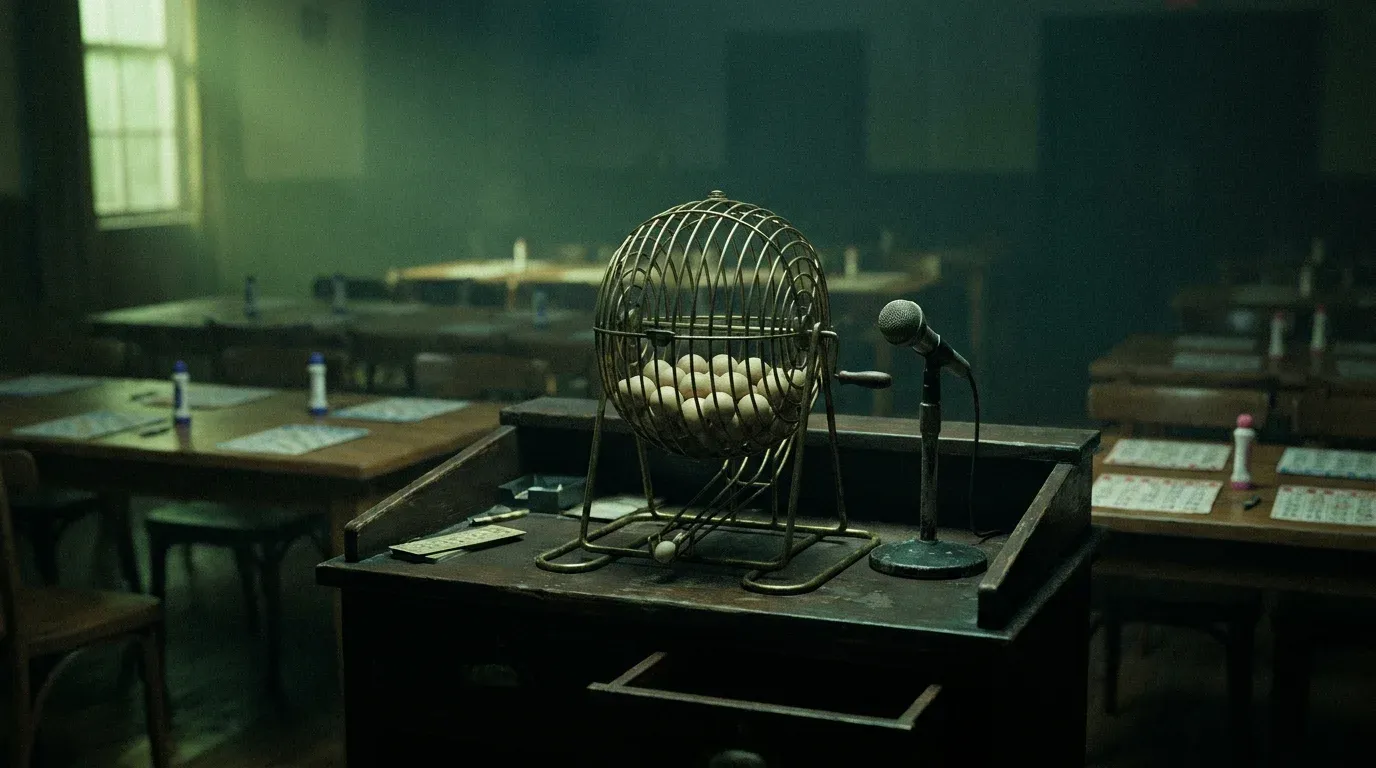
Bingo calls in Ireland are the nicknames attached to the numbers 1 to 90, such as "Legs Eleven" for 11, "Two Little Ducks" for 22, "Clickety Click" for 66 and "Top of the Shop" for 90. Callers use them so each number is easier to pick out in a busy hall.
No single official Irish bingo call sheet exists. Most of the familiar phrases are shared with British 90-ball bingo, and an Irish caller might say "Naughty Forty" for 40 while another just calls the number.
The complete Irish bingo calls list: 1 to 90
Irish players and callers recognise these traditional calls, though nobody is obliged to use them. Where there are two established versions, we've included both. You'll also find some older references that originated in Britain, because the two bingo traditions overlap heavily.
Bingo calls 1 to 30
| Number | Traditional call or familiar alternative |
|---|---|
| 1 | Kelly's Eye |
| 2 | One Little Duck |
| 3 | Cup of Tea |
| 4 | Knock at the Door |
| 5 | Man Alive |
| 6 | Half a Dozen / Tom Mix |
| 7 | Lucky Seven |
| 8 | Garden Gate |
| 9 | Doctor's Orders |
| 10 | Downing Street / Prime Minister's Den (UK-origin call) |
| 11 | Legs Eleven |
| 12 | One Dozen |
| 13 | Unlucky for Some |
| 14 | Valentine's Day |
| 15 | Young and Keen |
| 16 | Sweet Sixteen |
| 17 | Dancing Queen |
| 18 | Coming of Age |
| 19 | Goodbye Teens |
| 20 | One Score |
| 21 | Key of the Door / Royal Salute |
| 22 | Two Little Ducks |
| 23 | Thee and Me |
| 24 | Two Dozen |
| 25 | Duck and Dive |
| 26 | Pick and Mix / Half a Crown |
| 27 | Gateway to Heaven |
| 28 | In a State / Overweight |
| 29 | Rise and Shine |
| 30 | Dirty Gertie |
Bingo calls 31 to 60
| Number | Traditional call or familiar alternative |
|---|---|
| 31 | Get Up and Run |
| 32 | Buckle My Shoe |
| 33 | Dirty Knee / All the Threes |
| 34 | Ask for More |
| 35 | Jump and Jive |
| 36 | Three Dozen |
| 37 | More Than Eleven |
| 38 | Christmas Cake |
| 39 | 39 Steps |
| 40 | Naughty Forty / Life Begins |
| 41 | Time for Fun |
| 42 | Winnie the Pooh |
| 43 | Down on Your Knees |
| 44 | Droopy Drawers |
| 45 | Halfway There / Halfway House (less common) |
| 46 | Up to Tricks |
| 47 | Four and Seven |
| 48 | Four Dozen |
| 49 | PC |
| 50 | Half a Century |
| 51 | Tweak of the Thumb |
| 52 | Danny La Rue |
| 53 | Stuck in the Tree / Here Comes Herbie |
| 54 | Clean the Floor |
| 55 | Snakes Alive |
| 56 | Was She Worth It? / Shotts Bus |
| 57 | Heinz Varieties |
| 58 | Make Them Wait |
| 59 | Brighton Line |
| 60 | Five Dozen |
Bingo calls 61 to 90
| Number | Traditional call or familiar alternative |
|---|---|
| 61 | Baker's Bun |
| 62 | Turn the Screw |
| 63 | Tickle Me |
| 64 | Red Raw |
| 65 | Old Age Pension |
| 66 | Clickety Click |
| 67 | Stairway to Heaven |
| 68 | Saving Grace |
| 69 | Either Way Up |
| 70 | Three Score and Ten |
| 71 | Bang on the Drum |
| 72 | Six Dozen |
| 73 | Queen Bee |
| 74 | Hit the Floor / Candy Store |
| 75 | Strive and Strive |
| 76 | Trombones |
| 77 | Sunset Strip |
| 78 | Heaven's Gate / 39 More Steps |
| 79 | One More Time |
| 80 | Eight and Blank |
| 81 | Stop and Run |
| 82 | Straight on Through |
| 83 | Time for Tea |
| 84 | Seven Dozen |
| 85 | Staying Alive |
| 86 | Between the Sticks |
| 87 | Torquay in Devon |
| 88 | Two Fat Ladies (traditional) |
| 89 | Nearly There |
| 90 | Top of the Shop |
You might hear something a little different for 33, 40 or 45, or a completely new joke in a themed session. Every hall has its own habits. The number is what counts, and the nickname is up to the caller.
Are Irish bingo calls different from British ones?
Irish bingo calls are nearly identical to British ones. Ireland's traditional bingo halls typically use the same 90-ball format, and most of the well-known nicknames arrived with the wider bingo tradition. That's why a list from an Irish hall and a British hall can look almost identical.
Callers have their own preferences. "Dirty Knee" for 33, "Naughty Forty" for 40 and "Halfway There" for 45 are also heard in Ireland, as they are in Britain, and no caller is required to use them.
Some of the old calls are plainly British. "Downing Street" for 10 refers to the British prime minister's address, while "Torquay in Devon" for 87 names an English seaside town. Players passed these phrases down with the game itself, regardless of how little they had to do with Irish life.
Be sceptical of any "all-Irish" list stuffed with leprechauns, shamrocks and forced rhymes. Callers can invent themed jokes, of course, but that doesn't mean those jokes have been used in Irish bingo halls for generations.
The Irish stories behind a few familiar calls
Two calls carry a clear Irish link: number 52, through Cork-born entertainer Danny La Rue, and the bilingual calling that Gael Linn brought to Irish bingo.
52: Danny La Rue was born in Cork
"Danny La Rue" rhymes with fifty-two. The entertainer became famous on stage and television in Britain, but he was born Daniel Patrick Carroll in Cork in 1927. That gives 52 one of the firmest Irish roots on the traditional sheet.
The nickname isn't exclusive to Irish bingo, but if you've ever wondered what a stage performer has to do with number 52, that's the answer. The rhyme gave the call its staying power, and the Cork connection gives it a little extra relevance here.
Ireland also had bilingual bingo calling
Gael Linn, the Irish-language organisation, ran bingo in Ireland with bilingual calls, using Irish as well as English for the numbers. "Uimhir a haon" means number one and "uimhir a dó" means number two.
That says more about how bingo took hold in Ireland than any claim that all 90 rhymes were written locally. The familiar numbered game travelled widely, but communities and organisers found their own ways of running it.
There's no obligation to use a nickname at all. Calling the plain number in English or Irish gets the job done.
Why are the bingo numbers given nicknames?
Bingo numbers get nicknames for two reasons: to stop players mishearing similar-sounding numbers, and to add some fun to the draw.
The practical reason comes first. In a busy hall, with people chatting and checking paper tickets, 15 and 50 can sound alike. "Young and Keen" for 15 and "Half a Century" for 50 give you an extra clue about which number has just come out.
The second reason is the fun of it. A good caller can turn an otherwise ordinary sequence of numbers into something the room recognises together. Some phrases invite a laugh; others are so familiar that players know them before the caller finishes.
The calls fall into four groups:
- Rhymes: 3 is "Cup of Tea", 29 is "Rise and Shine" and 66 is "Clickety Click".
- Shapes: 11 is "Legs Eleven" (the two digits look like legs), 22 is "Two Little Ducks" (two 2s resemble ducks) and 69 is "Either Way Up" (it reads the same upside down).
- Simple maths: 12 is "One Dozen", 24 is "Two Dozen", 45 is "Halfway There" (halfway to 90) and 50 is "Half a Century".
- Older references: 39 is "39 Steps", 52 is "Danny La Rue" and 57 is "Heinz Varieties".
You will also see confident stories about where some older calls originated. "Kelly's Eye" and "Doctor's Orders", for example, come with competing explanations that are difficult to establish as fact. They're useful nicknames, but not every origin story you see repeated online should be treated as settled history.
How the calls fit into a real 90-ball bingo game
The calls belong mainly to 90-ball bingo, played on a ticket with three rows and nine columns. Each ticket carries 15 numbers, five in each row. The caller draws numbers between 1 and 90, and you mark the ones printed on your ticket.
A traditional game usually has three winning stages: one line, two lines and a full house. If you complete all five numbers in a row, you've made a line. Complete two rows and you've made two lines. Mark all 15 numbers and you've made a full house.
Let's say the caller announces "Two Little Ducks". If 22 appears on your ticket, you mark it. The nickname changes nothing about the number on the ball or the prize you are playing for.
If you're comparing the online versions, our guide to 90-ball vs 75-ball online bingo rules breaks down the differences in tickets, patterns and prizes.
Do online bingo sites in Ireland still use the traditional calls?
Some online bingo rooms still use the traditional calls, though you don't need them to follow the game. Online rooms show the drawn number on screen, and many games mark your card automatically. Even if you don't catch "Baker's Bun" the first time someone calls it, you can still see that number 61 has been drawn.
The traditional nicknames are mainly there for atmosphere. They're a reminder of a hall game that has become an online one, and they're part of the reason bingo can feel social even when the tickets are digital.
Not every bingo-style game uses the same system, either. Slingo has a grid that looks like bingo but uses spinning reels to generate numbers instead of a caller drawing balls for a room. Our guide on how Slingo works in Ireland covers that difference in more detail.
Do you need to memorise all 90 calls?
No, you don't need to memorise the 90 calls, and there's no point unless you enjoy the trivia. Knowing the calls is no strategy and won't improve your chances. They just dress up the numbers.
If you're going to a community bingo night, it helps to recognise the big ones: Legs Eleven, Two Little Ducks, Kelly's Eye, Clickety Click and Top of the Shop. The rest will become familiar soon enough. And if a caller says something you've never heard, just listen for the actual number.
Pay closer attention to the ticket price, what counts as a winning line and how the hall checks a full house. If you play for money, set a spending limit before the session begins. If you want a longer break, our guide to self-exclusion tools in Ireland covers the tools available to you.
If gambling is becoming difficult for you or someone close to you, Ireland's National Gambling Helpline is free and confidential on 1800 936 725, 24 hours a day.
Where can you play bingo online in Ireland?
Online bingo is the alternative to a hall night. Our ranking of the best online bingo sites in Ireland compares the sites side by side. Most online rooms show each drawn number on screen, so you can follow along without knowing a single nickname.

Alan Woods
Content Editor
Alan reviews casinos the same way he used to assess security risks: nothing gets the benefit of the doubt until it holds up under scrutiny. His cyber security background means he checks the things most reviews overlook, like licensing, how a site handles your data, and what the withdrawal terms actually deliver once the welcome offer is out of the way. He’s a published author as well, so you get the verdict in plain English instead of a technical checklist. For Ireland, he checks the licensing claims of operators serving Irish players and distinguishes Irish authorisation from offshore licences.
Share this article
Frequently asked questions
The bingo call for 22 is Two Little Ducks, because the pair of 2s looks a bit like two ducks sitting side by side. It's one of the most recognisable calls in both Irish and British bingo.
Clickety Click is the call for 66. The phrase rhymes with sixty-six, and it is a classic example of a call that's easier to remember than the number by itself.
52 is called Danny La Rue because the name rhymes with fifty-two. It refers to the entertainer Danny La Rue, who was born in Cork. The call is used outside Ireland too.
The traditional call for 88 is Two Fat Ladies, referring to the shape of the two 8s. Some modern callers drop that wording for another nickname or just call out 88.
No. There is no mandatory national list. The famous calls are widely understood, but what you hear on the night depends on the region, the caller at the microphone and whether it's a themed session.
Not as a complete set, because a 75-ball game only draws numbers from 1 to 75, and its ticket and prize patterns differ from 90-ball bingo. Some familiar nicknames may still be used for numbers the games share.
Related articles
 Sports betting
Golf Betting Explained: Each-Way, Rule 4, Dead Heats

 Sports betting
Betting Odds Explained: Fractions, Decimals, Margin
 Sports betting
Lucky 15 Bets Explained: Returns and Bonuses
 Sports betting
Each-Way Betting Explained: Places, Terms, Payouts
 Sports betting
Irish golfers to follow for bettors
 Safer gambling & law
Casino Won't Pay Out? Complaints in Ireland