




Slingo Explained: How It Works in Ireland
What Slingo actually is, how the grid, jokers and prize ladder work, and why Ireland has no rule requiring casinos to publish its RTP.

Share this article
Key Takeaways
- Slingo crosses a 5 by 5 bingo grid with slot reels, where each reel can only mark off numbers in its own column.
- Completing any of the twelve possible lines moves you up a prize ladder, and clearing all twenty-five squares is a Full House.
- Each Slingo title publishes its own RTP and Ireland has no rule requiring a casino to display it, so the game's paytable is the only reliable check.
Slingo explained: how the grid, ladder and jokers work
Open the casino lobby on most Irish-facing sites and you'll spot it straight away: a grid of numbers sitting above a row of spinning reels, looking like nothing else on the page. That's Slingo, and it's been quietly building a following for thirty years by doing something genuinely different: crossing a slot machine with a bingo card.
If you've never played, the name alone probably tells you more than the game itself does. Here's what Slingo actually is, how a round plays out, what the jokers do, and what the RTP picture looks like once you dig into it, because that last part is worth reading twice.
The short version
-
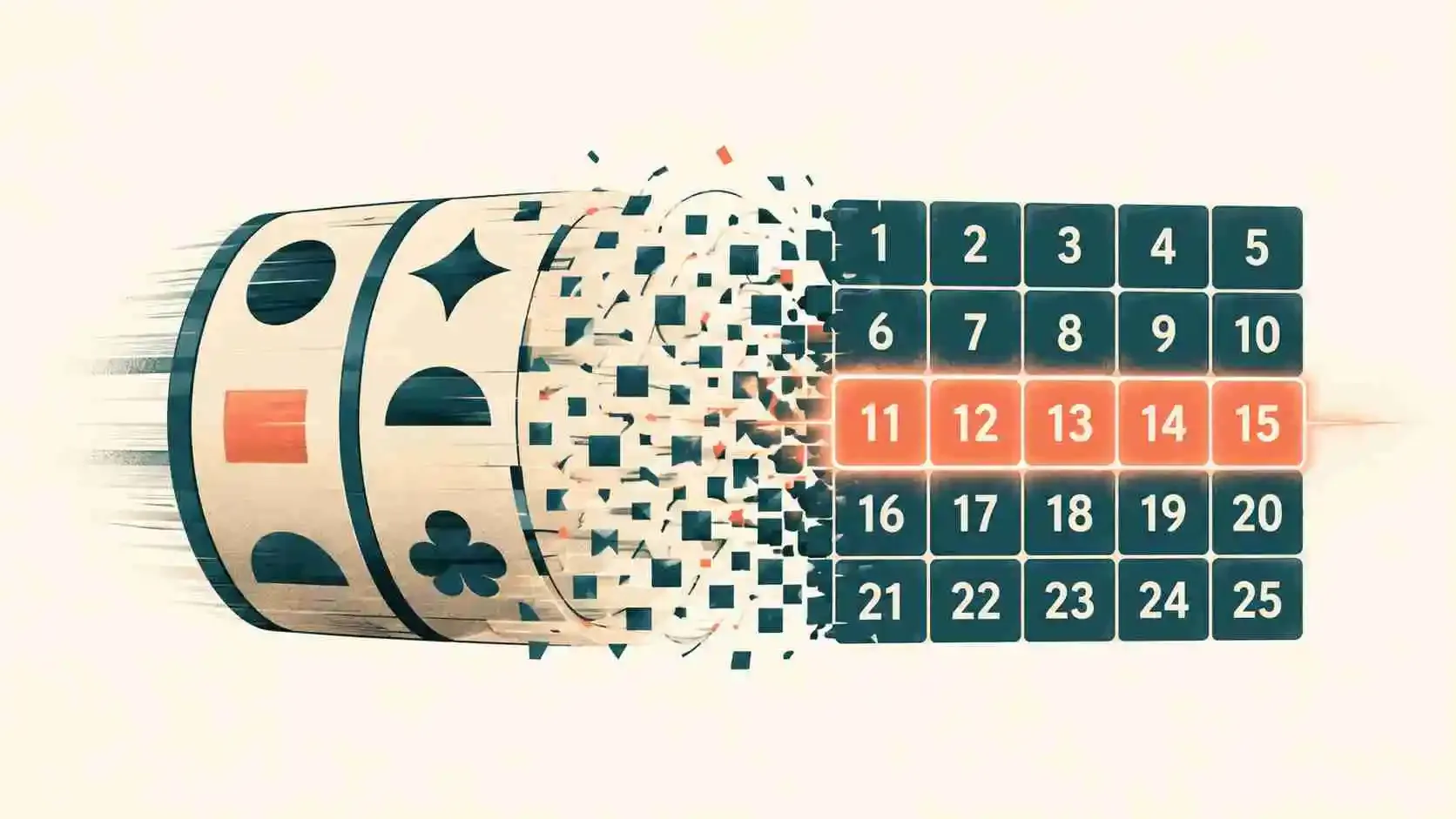
Slingo is a hybrid: a 5 by 5 numbered grid crossed with a set of spinning reels underneath it.
-
Your stake sets how many spins you get, usually somewhere around ten to twelve.
-
Complete a line, called a Slingo, and you move up a prize ladder. Clear the whole grid and it's a Full House, the top prize.
-
Jokers and Super Jokers are wild, and they're often the difference between finishing the ladder and falling short.
-
Ireland has no rule requiring a casino to publish a game's RTP, because the part of the licensing regime that would set one hasn't opened yet.
What Slingo actually is
Slingo was invented in the mid-1990s by an American businessman who founded a company of the same name to build it. The name is a straight portmanteau: slots plus bingo. It started life as a twenty-spin browser game and has since been rebuilt, several times over, as a real-money casino product.
The version you'll find at most online casinos today comes from a games studio that licenses the format under a well-known Originals brand. Rather than one fixed game, it's a whole catalogue: dozens of titles, each wrapping the same core mechanic in a different theme, and several borrow the look and feel of well-known slot machines you'd already recognise from the rest of the lobby.
It sits in an odd spot between two more familiar games. It isn't bingo in the traditional sense, there's no shared room, no other players marking the same numbers, and no caller. It isn't a standard slot either, because a single spin doesn't decide anything on its own. Your progress carries across the whole session, which gives it a different rhythm to either, and it's part of why the format has held its own for three decades rather than fading like most casino novelties do.
How a round of Slingo works
Understanding a round comes down to one repeated action: spin, match, mark off.
At the start of a game, you're given a 5 by 5 grid with twenty-five numbers on it, arranged at random. Underneath sit five reels, one for each column of the grid. Your stake sets how many spins you get, and that number is fixed by the individual game rather than by you, so it's worth a glance at the paytable before you start rather than assuming it matches the last title you played.
Each spin throws up a number on every reel. If a number matches one on your grid, but only in that reel's own column, it gets marked off. A number on reel three can only ever strike a number in column three of your grid, never anywhere else, which is the one rule that trips up most first-time players.
The aim is to complete lines. There are twelve possible ones on a standard grid: five rows, five columns and two diagonals. Complete any one of them and you've scored a Slingo, which moves you a rung up the prize ladder sitting at the side of the screen. Clear all twenty-five squares and that's a Full House, usually the biggest prize the game pays.
Volatility varies quite a bit by title. Some Slingo games pay smaller, more frequent prizes for early lines. Others hold most of the payout back for a Full House that might not land most sessions. Neither is more or less correct, it's a design choice, and it's worth knowing which type you're playing before you judge a session on how it felt.
Jokers, super jokers and the rest of the symbol set
A handful of special symbols can show up on the reels instead of a plain number, and they're what separates a good spin from a great one.
Number symbols are the default. Land one that matches your grid, in the right column, and it's marked off automatically.
Jokers are wild for their own column. Land one, and you can choose to mark off any unfilled number in the column directly above it, which is exactly what you want when one stubborn square is standing between you and a completed line.
Super Jokers do the same job, but for the entire grid rather than one column. They're the most powerful symbol in the game, and in most titles a Super Joker has to be placed before you deal with anything else that spin.
Devil symbols work against you. In most versions they act as a blocker: either cutting the value of your current prize or sitting in a square without helping you complete anything. The exact effect differs from title to title, so it's worth a read of the paytable rather than assuming, especially if you're used to a different Slingo game where the symbol behaves slightly differently.
Free spin symbols hand you an extra spin at no cost, on top of whatever you started with. That's different from paying for one, which we'll come to next.
Buying extra spins and free spins
Once your allotted spins run out, most Slingo titles offer you a choice: collect whatever prize you've built up on the ladder, or pay for one more spin and try to climb higher.
It's worth being clear-eyed about what that purchase actually buys you. An extra spin is exactly that, another spin, running on the same underlying odds as every spin before it. It doesn't shift the game's maths in your favour, and no amount of jokers changes the RTP baked into the title. What jokers and extra spins change is how many lines you manage to complete in a session, not the return the game is built to pay over time. It's worth keeping that distinction in mind before you reach for the buy button on instinct.
Free spin symbols are a different thing entirely. If one lands during your normal allocation, it's added on top at no extra cost, and there's no decision to make.
The RTP picture, and why Ireland has no rule about it
RTP, short for return to player, is the percentage of money staked on a game that it's mathematically built to pay back over a very long run of play. It's a long-run average, not a promise about any one session, and it says nothing at all about how a single spin will go.
Slingo doesn't have one single RTP the way roulette does. Each title in the catalogue publishes its own figure, and they vary. Independent listings put most titles somewhere in the low to mid nineties, broadly in the same range as a typical online slot, though a handful sit a little below that band and a handful a little above it. The only way to know the actual figure for the game in front of you is to check that title's own paytable at the casino you're playing, not a general figure for Slingo as a whole.
Here's the regulatory point worth knowing. In the UK, the technical standards that cover online gambling require the RTP to be displayed in the game itself. Ireland has no equivalent requirement yet. According to Citizens Information, the Gambling Regulatory Authority of Ireland licenses and regulates gambling, gaming and betting activity in Ireland. But the gaming category, which covers Slingo along with slots and table games, is the one licence type that hasn't opened for applications. The GRAI's own timeline puts that at some point across 2027 and 2028, a good while after betting came under an Irish licence in July 2026.
Until then, whichever regulator actually licenses the casino you're playing at, most often the Malta Gaming Authority, is the one setting the rules that game answers to, RTP included. An absent Irish licence isn't, on its own, a mark against a casino here. There simply isn't an Irish casino licence to hold yet.
Where Slingo turns up, and what's actually behind it
Slingo content is distributed widely now, so you'll usually find it filed alongside ordinary slots rather than tucked into a separate bingo section. That's a distribution choice by the operator, not a rule, and it varies from one lobby to the next.
If you'd rather play something closer to a traditional bingo room, ninety-ball or seventy-five-ball, we have covered how those actually work separately, since the format and the odds are quite different from what's described here.
The RTP and volatility questions that come up across every casino game, not just Slingo, are covered in more depth in our dedicated guide, and the same goes for the broader question of what licence, if any, actually sits behind an online casino in Ireland today, something we go into properly in our guide to the legal position.
None of that changes how you play a single round of Slingo. It just changes who's actually watching the operator's shoulder while you do, and that's worth knowing before you sit down to a game, not after something goes wrong.
Frequently asked questions
What is Slingo?
Slingo is a casino game that combines a bingo-style grid with slot machine reels. Numbers spin below a 5 by 5 grid, and matching ones are marked off until you complete lines called Slingos.
Is Slingo the same as playing bingo online?
No. Traditional online bingo is played in a room against other players working from the same drawn numbers. Slingo is a single-player game where your grid and your spins are entirely your own.
How many spins do you get in a game of Slingo?
It depends on the title, but most real-money Slingo games give you somewhere around ten to twelve spins for your stake. Check the paytable of the specific game before you play, since the number is fixed by the game rather than by you.
What does a Joker do in Slingo?
A Joker is wild for its own column. If one lands, you can use it to mark off any unfilled number in the column above it.
What's the difference between a Joker and a Super Joker?
A Joker only works within its own column. A Super Joker works anywhere on the grid, and in most titles it has to be used before anything else on that spin.
What counts as a good RTP for a Slingo game?
There's no single Slingo RTP. Individual titles publish their own figure, typically somewhere in the low to mid nineties, and the only reliable way to check is the paytable of the specific game at the casino you're playing.
Is Slingo legal to play in Ireland?
Yes, for adults aged 18 and over. Online casino games, including Slingo, aren't licensed in Ireland yet, so the casino offering it is operating under whichever licence it holds elsewhere, most commonly Malta.
Safer gambling: jokers and ladders make a session feel different to a straight slot spin, but the underlying odds don't move just because you've climbed a few rungs. If gambling is causing difficulty for you or someone you know, the National Gambling Helpline is free and confidential on 1800 936 725, 24 hours a day.

Alan Woods
Content Editor
Alan reviews Irish casinos the same way he used to assess security risks: nothing gets the benefit of the doubt until it holds up under scrutiny. His cyber security background means he checks the things most reviews overlook, like licensing, how a site handles your data, and what the withdrawal terms actually deliver once the welcome offer is out of the way. He’s a published author as well, so you get the verdict in plain English instead of a technical checklist.
Share this article