




Online Scratch Cards Explained: How They Work and What to Know
How online scratch cards work, what RTP means, how they compare to physical cards, and what UK regulation covers.


Share this article
Online scratch cards explained: what you're actually buying
An online scratch card is, at its core, a game of pure chance - an instant win or loss decided the very moment you hit play. That satisfying reveal - whether you're tapping, swiping, or just hitting "reveal all" - is simply for show. Scratch from any direction you like, or skip the animation altogether: it won't change a thing about the outcome.
That straightforwardness is a large part of the draw. There's no need to memorise strategies or wait around for a result. Choose your stake, start the game, and you'll know the outcome within seconds. For those playing at UKGC-licensed sites, online scratch cards generally return a higher share of stakes than the ones found at the newsagent - even so, it's worth paying attention to what the RTP figure really means, rather than just the headline number.
Let's break down how they work, what the odds really mean, where they stand apart from physical scratch cards, and which bits of UK regulation cover them (and which don't).
The short version
Online scratch cards rely on a random number generator (RNG) that sets your result the instant you launch a game. The scratching animation is just the reveal; it doesn't decide anything. RTPs at UK-licensed casino sites typically fall between 85-96% - that's usually higher than physical scratch cards, though often not quite as high as many online slots. It's also worth noting that the £5/£2 per-spin stake limits for online slots don't apply here: scratch cards are in a category of their own.
How online scratch cards work
As soon as you start an online scratch card, the RNG kicks in and sets the outcome straight away. The symbols you reveal by tapping or swiping are just a visual flourish over a result that's already locked in. Whether you take your time, go methodically, or jump straight to "reveal all", it won't alter what you win or lose.
Each card stands alone. There's no memory, no sense of being "due" a win, and no adjustments based on your recent results. UK regulations ban adaptive or compensated outcomes entirely. Every card is a fresh draw from the same set of odds, time after time.
Every game is built on a fixed prize table - a set structure of symbol combinations, prize amounts, and how likely each is to come up. Before a game appears at a licensed site, an independent lab checks the RNG and the maths behind it. The RTP figure shown in the game info is the one that has to stand up over a huge number of plays.
Online scratch cards versus physical scratch cards
The first clear difference is RTP. Physical National Lottery scratch cards display their prize fund percentages for each game, and these tend to be noticeably lower than what's on offer at a licensed online casino. Some of this comes down to the costs of printing and distribution, not to mention the portion of National Lottery revenue earmarked for good causes. Online scratch cards sidestep those extra costs, and the competition among providers generally means higher RTPs for players.
There's also a fundamental difference in how prizes are distributed. Physical scratch cards are printed in finite runs, with each batch containing a set number of jackpot winners. Once those jackpot tickets are gone, so is the top prize. The National Lottery even publishes how many top prizes remain in each game - if that number hits zero, you're paying full price for a card with no chance of the headline win. Well worth a quick check before parting with your cash.
Online casino scratch cards don't suffer from a dwindling prize pool. Thanks to the RNG, each card is drawn from the same set of odds no matter how many have been played before. There's no need to check for remaining prizes, as they never run out.
Online games also offer a broader range of stakes - from as little as 10p per card up to £20 or more, depending on the title - and come in more varied formats, including progressive jackpots and multi-panel bonus rounds.
What RTP actually means for scratch cards
RTP - return to player - is the percentage of total money staked on a game that's paid back as prizes over a vast number of plays. A 92% RTP, for example, means that across all players and all sessions, £92 is paid out for every £100 wagered on that title.
But for any single player or session, the RTP doesn't say much. One card - or even a short run - can swing wildly above or below that theoretical average. The figure is calculated over millions of plays, and a big jackpot or two can skew the numbers. In practice, most players see results below the headline number on any given day. It's best used as a tool for comparing games, not as a promise of what you'll get back.
Volatility is another factor worth a look. Low-volatility scratch cards tend to pay out more often, but in smaller amounts - think more frequent little wins, fewer lengthy dry spells. High-volatility games, by contrast, mean longer stretches without a win, but bigger prizes when they do land. Which approach works best really depends on your budget and appetite for risk.
At any UK-licensed site, the RTP must be published clearly in the game's information section, as required by the Gambling Commission's technical standards. That figure is visible before you stake a penny - and it's always worth a quick glance.
What UK regulation covers
Online casino scratch cards at UKGC-licensed sites fall under the same regulatory umbrella as slots and table games. A handful of protections actually make a difference for players.
Certified random outcomes. Every game has to use a certified RNG, tested by an approved independent lab before going live, with regular audits to keep things in check. Adaptive or compensated outcomes - where the game adjusts results based on your recent play - are banned outright. Each scratch card is genuinely independent of the last.
Published RTPs and rules. The odds of winning and the game's rules must be there for you to see before you play. Operators aren't allowed to hide this somewhere obscure; it needs to be front and centre in the game itself.
No slot stake limits. The £5 cap (or £2 for 18-24 year olds) on spins, introduced for online slots in 2025, only applies to reel-based games. Scratch cards and instant win games sit in a separate product category, so those limits don't apply. The price per card is set by the game provider.
Standard player protection tools. Deposit limits, time-out options, net position displays, session reminders, and self-exclusion through GamStop all apply at any licensed site offering scratch cards, just as they would for any other product on the platform.
How bonuses interact with scratch cards
Scratch cards can be the awkward customer when it comes to bonuses. Many UK welcome offers and deposit matches either exclude instant win games from wagering contributions altogether or weight them far lower than slots - sometimes as little as 0-5%. So, playing through bonus funds on scratch cards may do very little, or nothing at all, to help clear a requirement.
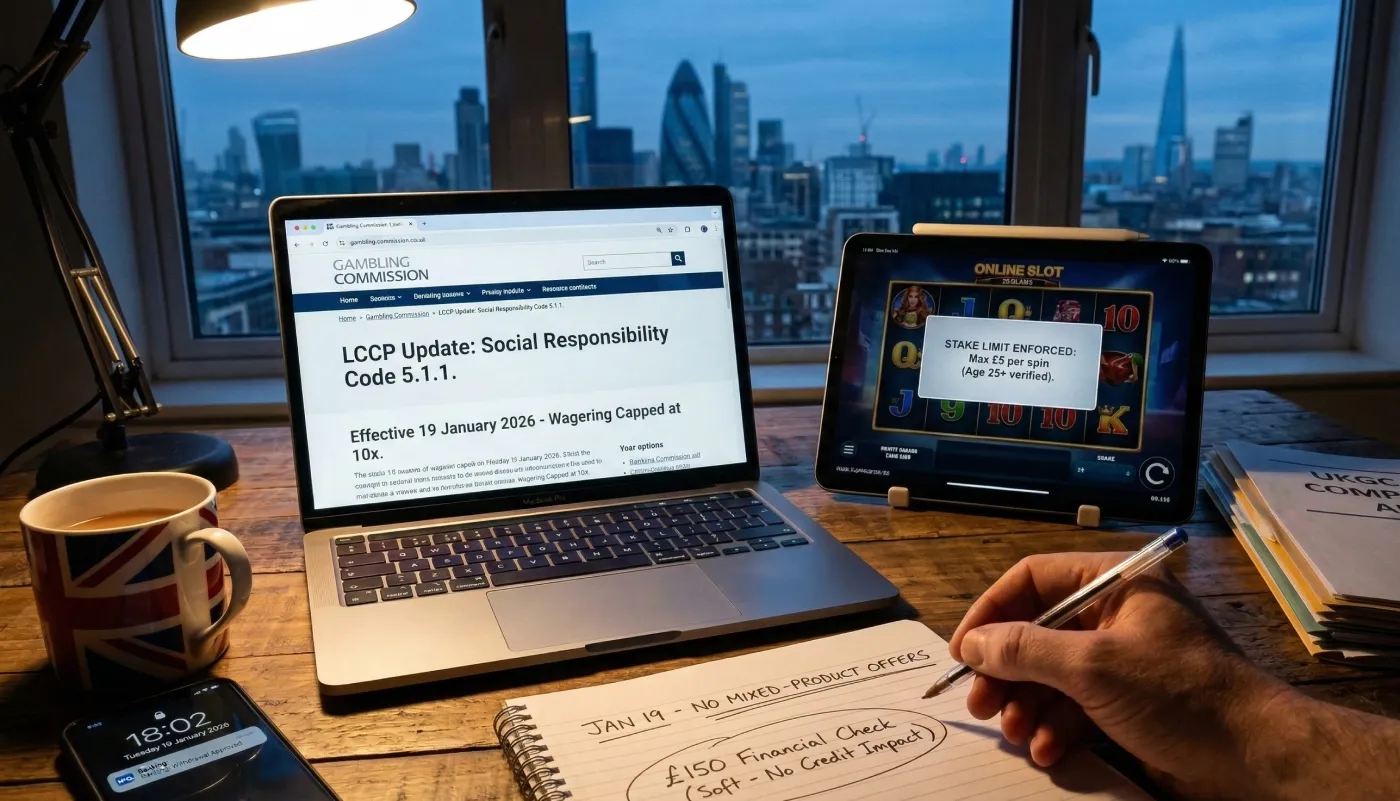
The check is simple: always look at the game contribution table in the terms before using any bonus credit on a scratch card. Since January 2026, wagering requirements at all UK-licensed sites are capped at 10x the bonus, but that limit only helps if your stakes actually count towards clearing it. Our guide to wagering requirements covers contribution tables in detail, including why your choice of game can make a real difference when using bonus funds.
If you'd rather play scratch cards with real money and skip bonus restrictions entirely, you're free to decline any welcome offer - every UKGC-licensed site is required to give you that choice.
A few things the game page won't tell you
The RTP can vary for the same game at different sites. Some providers release a title with several different RTP builds, and it's up to each operator to decide which version to offer. The figure shown in your game's info screen is the one that applies to you - even if the same title has a different number elsewhere.
"Remaining prizes" only really matters if you're buying a physical card. With online casino scratch cards, every single card draws from the same odds. If you're picking up a National Lottery card at the shop, their website publishes how many top prizes are still available on each game. That's genuinely useful info before you hand over your fiver.
Progressive jackpot RTPs are usually worked out without including the jackpot contribution. When a game feeds into a progressive, the headline RTP often leaves out the prize pool part. The real return is slightly higher than what's stated, but the chance of hitting the jackpot on any single card is slim enough that it doesn't shift things much in reality.
It's easy to underestimate just how quickly things can move. Instant results with no pause between games mean it's straightforward to get through a lot of cards in a short time. Setting a deposit limit before you start is, by far, the smoothest way to keep things in check.
Where scratch cards sit on the wider menu
Online scratch cards have carved out a particular niche: they're quicker than waiting for a lottery draw, slower-paced than a full-on slot session with autoplay, and offer more variety - and often better RTPs - than the physical cards you'll find in a shop. They're not for everyone - the lack of strategy or skill is the main appeal for some and a drawback for others - but as a category, they're well-regulated, transparent about the odds, and refreshingly easy to get started with.
If you're looking at where to play, our best online casinos guide covers licensed sites with a solid instant win selection alongside their broader game menu.
Frequently asked questions
How do online scratch cards work? An RNG determines your result the instant you start a game. The symbols you reveal by tapping or swiping are the visual presentation of an outcome that's already been set. How you scratch - which panel you pick first, how quickly - makes no difference to what you win.
Are online scratch cards rigged? Not at UKGC-licensed sites. The Gambling Commission requires that the RNG in every game is certified by an approved independent test house, and adaptive outcomes - where a game adjusts its results based on your recent play - are banned outright. Each card is a clean, independent draw.
What's a typical RTP for online scratch cards? At UK licensed casino sites, RTPs generally sit somewhere in the 85-96% range, though individual titles vary. Physical National Lottery scratch cards have lower stated prize fund percentages, which reflects the cost of printing, distribution, retail commissions and contributions to good causes. The National Lottery publishes its prize fund figure for each card on its website.
Do the £5 and £2 online slot stake limits apply to scratch cards? No. Those limits were introduced specifically for online slot games, defined by law as reel-based games. Scratch cards and instant win games are a separate product category and are not covered by them.
Can I use a casino bonus on scratch cards? Possibly, but check first. Many bonus offers exclude scratch cards from wagering contributions or apply a much lower weighting than slots. Using bonus funds on a game that contributes at 5% means you're effectively facing a much tougher clearance than the stated requirement suggests.
What's the difference between online and National Lottery scratch cards? Both use the same basic mechanic - reveal symbols and win if they match - but they work differently. National Lottery cards have a finite printed run with a fixed number of prizes; once jackpots are won, they're gone. Online casino scratch cards use an RNG, so every card plays to the same odds with no depleted pool. They're also licensed differently: online casino scratch cards require a remote casino operating licence.
Safer gambling: online scratch cards always carry a house edge. If gambling is becoming a problem for you or someone you know, the National Gambling Helpline is free and available 24/7 on 0808 8020 133.

Alan Woods
Content Editor
Alan reviews Irish casinos the same way he used to assess security risks: nothing gets the benefit of the doubt until it holds up under scrutiny. His cyber security background means he checks the things most reviews overlook, like licensing, how a site handles your data, and what the withdrawal terms actually deliver once the welcome offer is out of the way. He’s a published author as well, so you get the verdict in plain English instead of a technical checklist.
Share this article