





American vs European vs French Roulette: Which Has Better Odds?
French roulette offers a 1.35% house edge with La Partage. European sits at 2.70%. American climbs to 5.26%. Here's the differences.

Share this article
American vs European vs French roulette: which version gives you better odds?
Three wheels, three house edges, and only one real choice if odds actually matter to you.
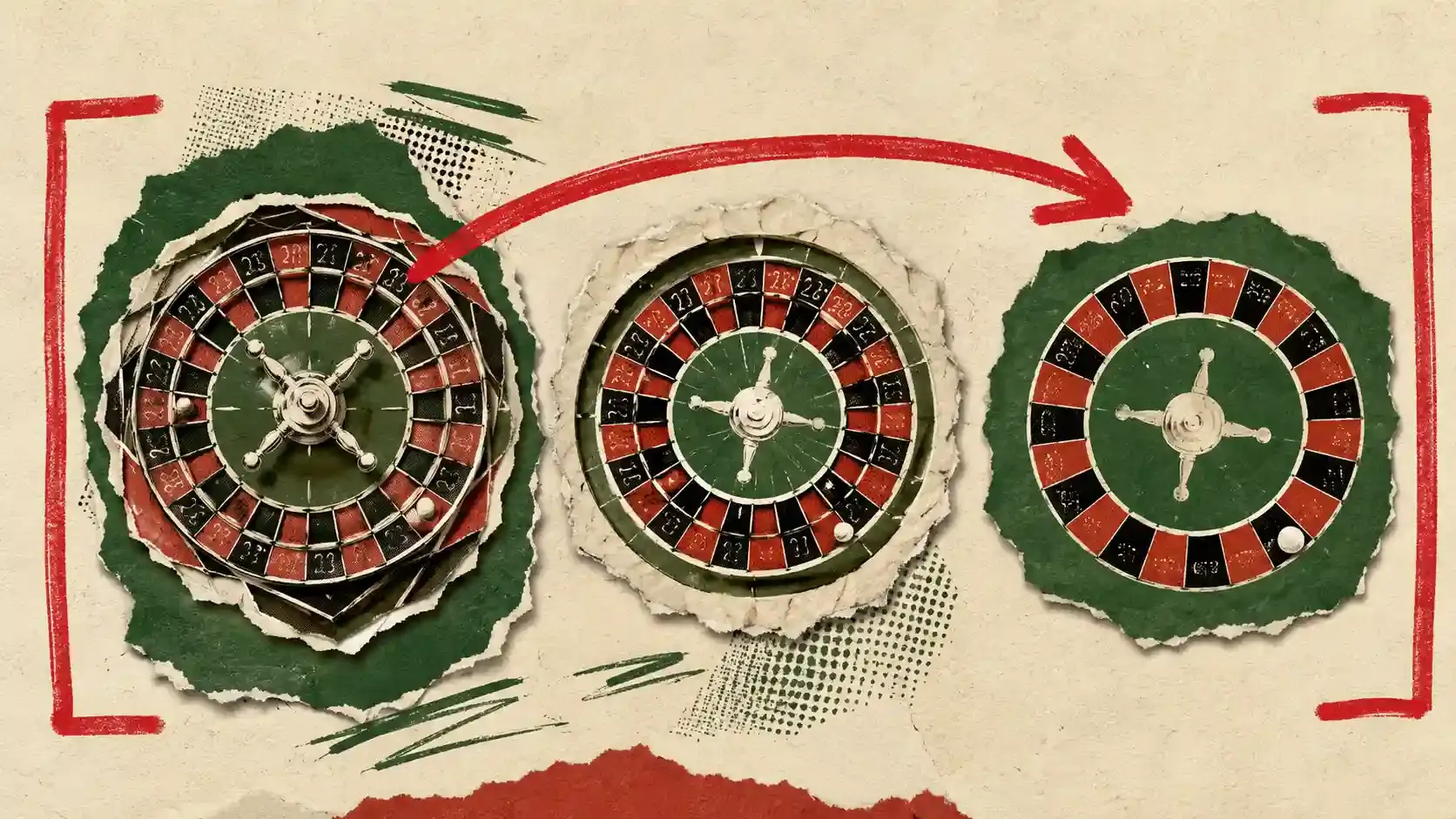
French roulette stands out from the trio: thanks to La Partage, the house edge on even-money bets falls to just 1.35%. European roulette, the classic choice across UK casinos, sits at 2.70%. American roulette, on the other hand, adds an extra double-zero pocket, bumping the house edge up to 5.26% - nearly double the European rate, and with nothing extra in return for players.
In the end, it all comes down to this: how many chances the house has to take your money before a bet even gets started.
The short version
European roulette features a 37-pocket wheel with just the single green zero. Every wager faces a 2.70% house edge. It's the staple at UK online casinos - a familiar, reliable option for most.
American roulette throws in a double zero (00), nudging the wheel up to 38 pockets. Standard bets come with a 5.26% house edge. One exception lurks: the basket bet, covering 0, 00, 1, 2, and 3, which pushes the edge up to a punishing 7.89%. No other regular roulette bet is quite as tough to overcome.
French roulette keeps the 37-pocket, single-zero wheel, but stands apart thanks to two special rules - La Partage and En Prison - which come into play when the ball lands on zero. On even-money bets, half your stake is returned, rather than being lost outright. This trims the house edge from 2.70% down to 1.35% on those bets. For all other wagers, French roulette behaves just like its European cousin.
European roulette: the UK baseline
European roulette turns up at nearly every UK online casino. The wheel itself runs from 0 to 36, laid out in a non-sequential pattern devised in the 18th century. Those alternating red and black pockets aren't just for show - they follow a deliberate design. The lone green zero? That's the house edge, staring back at you every spin.
That 2.70% house edge isn't an accident - it's built right into the game. Every bet is calculated as if there are only 36 numbers on the wheel, not 37. Put money on a single number, and the payout is 35:1, even though your real odds are 36:1 against - one way to win, 36 ways to lose. That little gap between probability and payout is where the casino quietly collects its share, no matter what you're betting.
Plenty of European tables also have call bets - named sections like Voisins du Zéro (neighbours of zero), spanning 17 numbers; Tiers du Cylindre, which grabs a third of the wheel opposite zero; and Orphelins, picking up the stragglers. These aren't shortcuts to better odds - they're simply a way to cover a segment of the wheel in one go. The house edge remains at 2.70% for all of them.
American roulette: what the double zero actually costs
At first glance, American roulette looks much like the European version - same layout, same bets, same payouts. The difference? A second green pocket, marked 00, brings the total to 38.
Roulette payouts stay the same - a straight-up bet on any number, 00 included, still pays 35:1. But your odds have slipped: it's now one winner against 37 losers, not 36. That's where the house wins, pushing the edge up to 5.26%. Over £1,000 in bets, that's roughly £53 gone, compared to £27 on a European wheel. Same game, same spins, but more left behind for the casino.
There's one American-only bet worth flagging - and steering clear of - the basket bet. It lets you wager on 0, 00, 1, 2, and 3 at once, paying 6:1. Trouble is, a fair payout would be 6.6:1, but casinos round down, never up, so the house edge jumps to 7.89% - the harshest of any standard roulette bet. If those numbers are calling your name, you're better off placing straight-up bets on each, keeping the edge at 5.26% instead.
French roulette: the best odds on the wheel
French roulette shares the 37-pocket, single-zero wheel with European roulette. The roulette table layout shifts a bit, and the bet names get a French twist (think Rouge/Noir, Pair/Impair, Manque/Passe), but the gameplay is the same - including the 2.70% house edge on inside bets and on dozens or columns.
But two rules make all the difference - both triggered only when the ball lands on zero.
La Partage - 'the divide' - kicks in on even-money bets: red/black, odd/even, or high/low (1-18 or 19-36). If zero lands, rather than losing the lot, half your stake comes back. Place £20 on red and see zero arrive? £10 returns to your balance, £10 goes to the house. That's what cuts the house edge on these bets from 2.70% down to 1.35%.
En Prison ('in prison') is the alternative you'll sometimes see. Rather than getting half back, the full bet is 'imprisoned' for the next spin. If your bet wins on the follow-up, you get your entire stake back - no extra winnings, just a reprieve. Lose, and the lot is gone. If zero lands again, most tables forfeit the bet, though a few allow it to be 'doubly imprisoned'. Either way, the maths works out the same: a 1.35% house edge on even-money bets, just via a different route.
Both rules are reserved for even-money bets only. Inside bets, splits, corners, and streets all play out exactly like European roulette - no La Partage safety net, no En Prison lifeline.
Which variant to play?
Purely by the numbers, the pecking order is straightforward: French, then European, then American. For anyone who sticks to even-money bets - red/black, odd/even - French roulette with La Partage offers the lowest house edge you'll find at any casino table, unless you're a single-deck blackjack perfectionist.
European roulette is the go-to when French isn't on offer, or if you're betting inside, where the house edge matches anyway. It's widely available at UK sites and offers a fair shake.
American roulette is best avoided if you care about odds. The double zero offers nothing for the player - just an extra way for the house to win every time. Some enjoy the wider spread of bets or the particular air around the table, and fair enough. But if stretching your money is the aim, that extra pocket is quietly draining your balance.
Worth noting: the £5 and £2 per-spin stake limits brought in by the Gambling Commission in 2025 apply to online slots, not roulette. Table limits are set by each operator, with no blanket regulatory cap for roulette spins.
Roulette online in the UK
UK-licensed sites must follow the Gambling Commission's random outcome rules (RTS 7), which ban any game that tweaks its results based on past spins. No roulette wheel - physical or digital - can 'remember' where the ball landed. Both RNG (software-generated) and live dealer roulette are bound by these standards.
Live dealer roulette features a real wheel spun by an actual croupier in a studio. The experience is different, but the rules and house edge are identical to the RNG versions - the maths doesn't budge. For a deeper look at how fairness rules work across casino games, see the piece on 'are online slots rigged?' - in short, licensed games are tested and audited on a regular basis.
For recommendations on where to play, the best online casinos guide rounds up the UK's top options, including those that offer French roulette with La Partage.
Frequently asked questions
What's the difference between European and American roulette? One pocket: American roulette adds a double zero (00) to give 38 pockets versus European's 37. The payouts are identical, but the extra pocket raises the house edge from 2.70% to 5.26% on every standard bet.
What is French roulette? French roulette uses the same 37-pocket, single-zero wheel as European, but adds La Partage and En Prison rules. On even-money bets, if zero lands, you recover half your stake (La Partage) or hold your full bet over for the next spin (En Prison). That cuts the house edge on even-money bets to 1.35%.
What is La Partage in roulette? La Partage is a French roulette rule that returns half your stake when zero lands and you have an even-money bet in play. Bet £20 on black, zero comes up, £10 comes back. It halves the house edge on even-money bets from 2.70% to 1.35%.
Is the house edge the same on all bets in European roulette? Yes. Every bet in European roulette - from a straight-up single number to red/black - carries the same 2.70% edge. In American roulette, every standard bet is 5.26%, with the single exception of the basket bet (0, 00, 1, 2, 3), which is 7.89%.
Do UK stake limits apply to roulette? No. The £5 per-spin limit (players 25+) and £2 per-spin limit (players 18-24) apply to online slots only. Roulette is not covered by those rules.
Does the house edge change in live dealer roulette? No. The same wheel and rules apply whether you're playing RNG or live dealer. The house edge is determined by the game variant - European, American or French - not the format.
Can a betting system beat the house edge? No betting system - Martingale, Fibonacci, Labouchere or any other - changes the underlying mathematics. They alter the size and pattern of your bets, not the odds on each individual spin. French roulette with La Partage is the only available reduction in house edge, and that comes from the game's rules, not from strategy.
Safer gambling: roulette carries a house edge on every spin, and no system removes it. Set a deposit limit before you play and stick to it. If gambling is becoming a problem for you or someone you know, the National Gambling Helpline is free and available 24/7 on 0808 8020 133.

Alan Woods
Content Editor
Alan reviews Irish casinos the same way he used to assess security risks: nothing gets the benefit of the doubt until it holds up under scrutiny. His cyber security background means he checks the things most reviews overlook, like licensing, how a site handles your data, and what the withdrawal terms actually deliver once the welcome offer is out of the way. He’s a published author as well, so you get the verdict in plain English instead of a technical checklist.
Share this article