




Blackjack Card Values Explained: What Every Card Is Worth
Blackjack card values: numbered cards at face value, jacks, queens and kings all worth 10, and how the ace's 1-or-11 rule works in practice.

Share this article
Blackjack card values explained: what every card is worth and why it matters
Let's cut straight to it: numbered cards carry their face value, every jack, queen and king is worth 10, and the ace flexes between 1 and 11, whichever works in your favour. Suits? They're irrelevant here.
That's the basics in a nutshell. Things only start to get intriguing when these values come into play - especially the ace, which pulls more than its weight in a game centred on 21.
Here's the full breakdown: every card, every combination, and why knowing these values gives you a clear edge over simply playing by gut feel.
Card values at a glance
Before diving into the details, here's the whole lot in one place:
- 2 through 10: worth exactly the number printed on the card.
- Jack (J): worth 10.
- Queen (Q): worth 10.
- King (K): worth 10.
- Ace (A): worth 1 or 11 - whichever is better for your hand.
The suit - hearts, clubs, diamonds, spades - carries no value in blackjack, full stop. A 9 of spades and a 9 of hearts are identical for the purposes of the game.
Number cards: what you see is what you get
The most straightforward lot: cards numbered 2 to 10 do exactly what they say on the tin - no hidden rules or surprises.
A 4 of diamonds is just a 4. A 10 of hearts is simply 10. Suits don't come into it. Most hands revolve around these cards, making the maths easy enough once you start adding.
Jacks, queens and kings: all worth 10
All three face cards - jack, queen, king - sit at 10 points apiece.
There's often a bit of confusion about whether the king trumps the queen, or if the jack sits lower. Truth is, there's no pecking order here. A jack of spades, queen of hearts or king of clubs - they're all just 10 in blackjack, plain and simple. The only moment the actual card matters is when you're splitting pairs: two jacks can be split, but you can't split a jack with a queen, despite both being worth 10.
With four face cards in each suit and four suits in the deck, you end up with 16 face cards in a standard 52-card pack. Add in the four tens and there are 20 cards valued at 10 - nearly a third of the deck. That density has a real impact on the game's maths, and it's worth bearing in mind.
The ace: the card that does two jobs
The ace stands out as blackjack's cleverest card, toggling between 1 and 11 as needed to keep your hand in play.
In practice, the ace takes whichever value keeps you from going over 21. Dealt an ace and a 6? That's either 7 or 17, but of course you'd play it as 17. Draw a high card next and the ace quietly shifts down to 1 - so ace + 6 + 9 lands you on 16, not a bust. It's a subtle bit of insurance built into the rules.
That flexibility is the ace's real magic. If your ace can still count as 11 without tipping you over, you've got what's called a soft hand. If the ace must drop to 1 - or there's no ace at all - it's a hard hand.
Hard hands and soft hands: why the distinction matters
Soft and hard hands might sound like jargon, but the difference genuinely shapes how you play each hand.
With a soft hand (ace as 11), there's no immediate danger in drawing another card. If you'd go over 21, the ace simply drops to 1. That buffer lets you play more boldly - a soft 16 or 17, for instance, is usually a green light for another hit.
A hard hand offers no safety net - there's either no ace, or the ace is stuck at 1 to keep the total below 22. Hard totals between 12 and 16 are where things get tense: every high card could bust you, but you're not sitting comfortably either way.
Spotting the difference is step one in reading any hand properly. Two cards adding up to 17 can be worlds apart, depending on whether there's an ace in the mix.
Natural blackjack: when the values add up perfectly
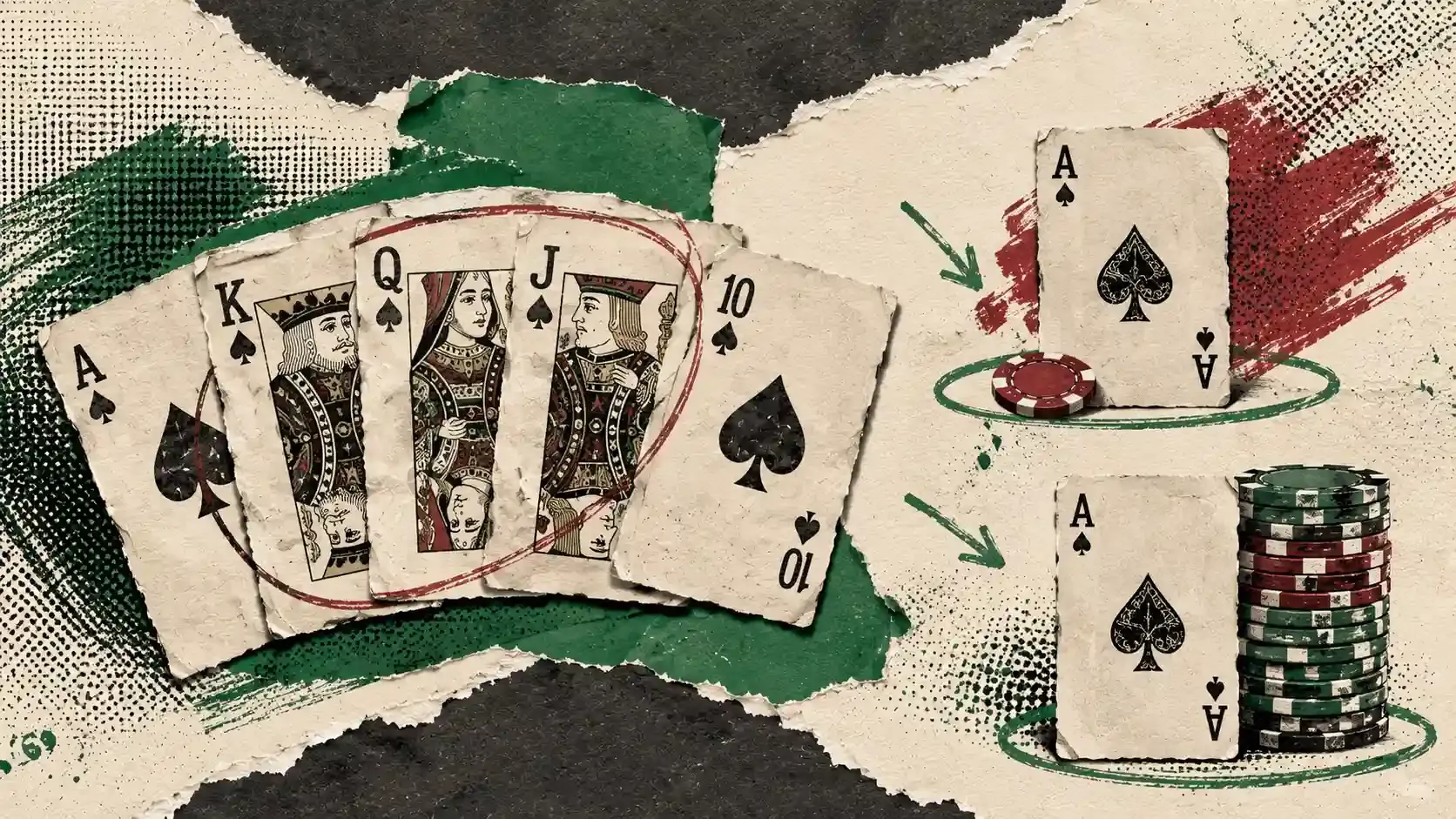
The dream opening is a natural blackjack: an ace paired with any 10-value card (that's a 10, jack, queen or king) as your first two.
That combo instantly lands you on 21 and pays 3:2 at most UK casino tables - so a £10 bet earns £15, rather than just a tenner for a normal win. It's tough to beat; only a dealer's own natural can match it, making it a push and your stake is returned.
One thing to watch: some online blackjack games pay only 6:5 on a natural instead of 3:2. A £10 bet gets you £12 rather than £15. That might seem minor, but it bumps up the house edge quite a bit. Always check the payout rate in the game's info before you play.
How card values shape the strategy
Knowing the values is just the start. What they actually give you is a proper insight into probability.
With around 30% of the deck made up of 10-value cards, any face-down card is likeliest to be a 10. That single fact underpins most of basic strategy. It's why most assume the dealer's hole card is a 10, why hitting on 11 feels promising (since a 10 would land you 21), and why it's smart to stand on a shaky total when the dealer shows a bust card - like a 5 or 6.
Play every hand sensibly, and the house edge in standard blackjack is a slim 0.5% - one of the lowest you'll find in any UK casino. Skip the strategy and it jumps to 2-4%, as you're giving up the edge that knowing card values provides. For a wider look at house edge, see our article on whether online slots are rigged, which digs into RTP and casino odds more broadly.
Playing online: how UK-licensed blackjack handles the cards
Online blackjack - whether it's RNG or live dealer - keeps the card values identical to the physical game. That bit remains unchanged.
What does shift is how shuffling happens. Live dealer games use several physical decks from a shoe, shuffled now and then. RNG games reset and reshuffle the deck before every hand, all handled by software. Under UK Gambling Commission rules, outcomes must be genuinely random - RTS 7 makes it clear: no adapting or compensating for past results. A streak of bad hands doesn't mean a good one is due; compliant UK games simply don't work that way.
It's also important to note: the £5 and £2 online stake limits brought in during 2025 only apply to slots, not to table games like blackjack. There's no official stake cap on online blackjack hands.
The real difference when picking where to play is in the variant rules: number of decks, whether the dealer hits or stands on soft 17, whether surrender's allowed. All these details nudge the house edge up or down, and you'll find the specifics in each game's info panel. For recommendations, our best online casinos guide spotlights well-licensed places worth a look.
Frequently asked questions
How much is an ace worth in blackjack? The ace plays as either 1 or 11 - whichever keeps your hand alive. It automatically adjusts: if a new card would tip you over 21 with the ace at 11, it slides down to 1.
What is a jack worth in blackjack? A jack is always 10, just like the queen, king and the 10 card. All three face cards share that value - no ranking between them.
What are the queen and king worth in blackjack? Both come in at 10 - same as the jack. There's no hierarchy among face cards in blackjack.
What is a soft 17 in blackjack? A soft 17 is any hand totalling 17 with an ace counted as 11 - like ace and 6. It's 'soft' because another card won't bust you straight away; if you go over, the ace falls back to 1. Most UK dealer rules have the dealer stand on soft 17.
Does suit affect card value in blackjack? Not in the slightest. Hearts, clubs, diamonds and spades don't matter a jot. A 5 of hearts and a 5 of spades are identical in value.
What is a natural blackjack? It's an ace and any 10-value card (10, jack, queen or king) as your first two cards. That's 21 and pays 3:2 at most UK tables - a £10 bet nets £15, for £25 total back instead of the usual £20.
Why are there so many 10-value cards in blackjack? Four types are worth 10 - the 10 card, jack, queen and king. That's 16 out of 52 cards, or about 30% of the pack, making tens the most common group by far.
Safer gambling: understanding card values gives you a firmer handle on the game, but the house edge means losses will stack up over time, not wins. Set a deposit limit before you play and stick to it. If gambling's becoming an issue for you or someone you know, the National Gambling Helpline is free and open 24/7 on 0808 8020 133.

Alan Woods
Content Editor
Alan reviews Irish casinos the same way he used to assess security risks: nothing gets the benefit of the doubt until it holds up under scrutiny. His cyber security background means he checks the things most reviews overlook, like licensing, how a site handles your data, and what the withdrawal terms actually deliver once the welcome offer is out of the way. He’s a published author as well, so you get the verdict in plain English instead of a technical checklist.
Share this article