

Slot volatility explained: high vs low variance
Slot volatility shapes payout frequency and size. Compare high and low variance, check RTP separately, and understand what each means for your budget.

Key Takeaways
- Volatility describes the spread of slot payouts, while RTP describes the long-run expected return.
- Higher volatility can produce larger balance swings and extended runs without a meaningful return.
- Check the game's own information and set a spending limit; neither low volatility nor a high RTP guarantees a winning session.
Slot volatility explained: high vs low variance
Volatility is the property that directly shapes what a slot session feels like, and it gets far less attention than the theoretical return to player figure sitting next to it in the game info screen.
RTP tells you the long-run cost of play. Volatility tells you the shape of the ride: how often wins arrive, how large they tend to be, and how much your balance can move in a single session. Two slots can share the same RTP and deliver completely different experiences because one is high volatility and one is low.
It takes about thirty seconds to check before you open a game, and it's worth doing.
What volatility actually means
Volatility - and variance, which means exactly the same thing - describes how a slot distributes its payouts around its long-run average. The RTP is that average: a 96% RTP game is designed to return £96 for every £100 staked across millions of spins. Volatility is the shape of how that £96 arrives.
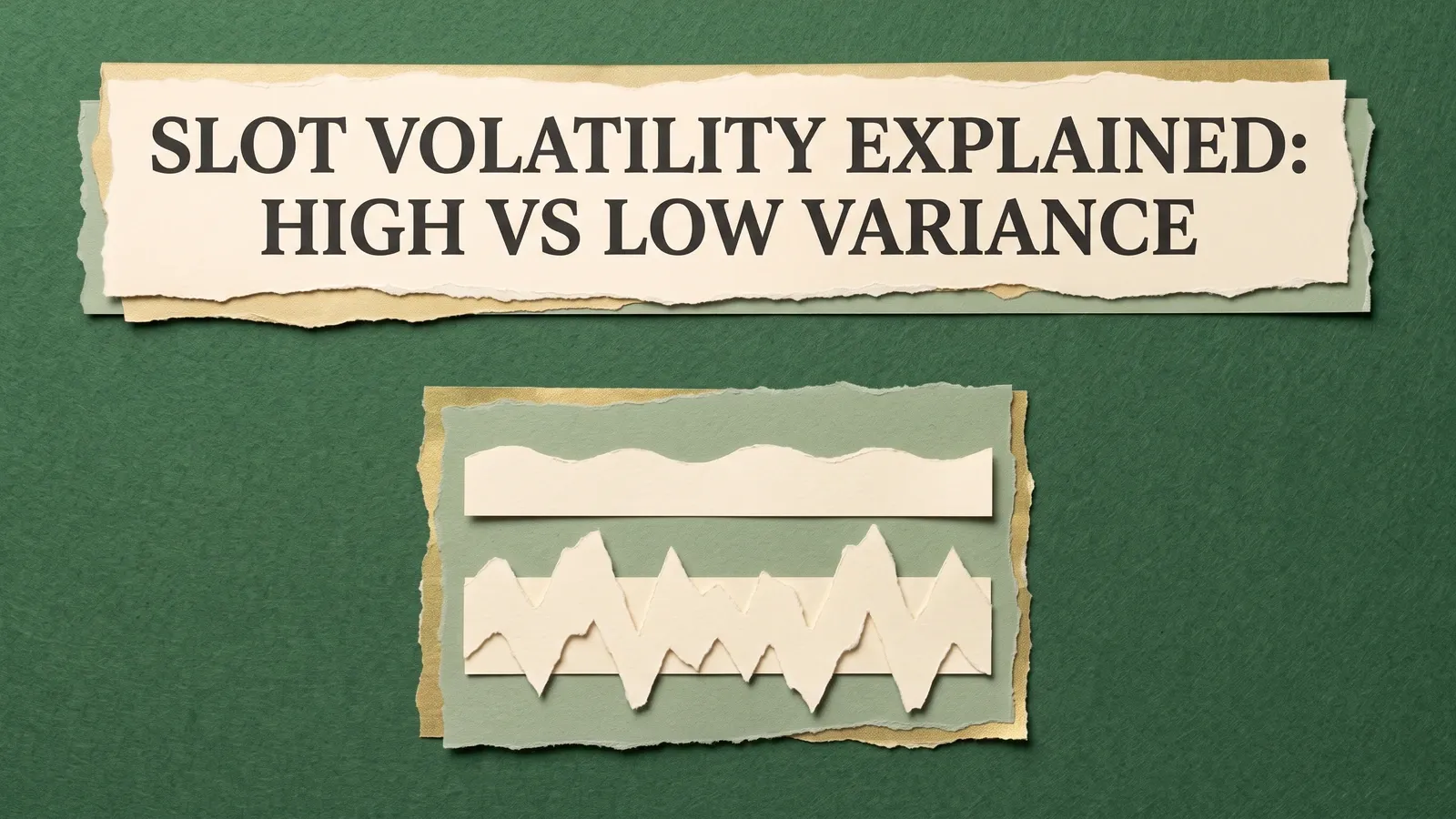
Picture two slots at 96% RTP. The first returns 30p, 50p, 20p and 10p across four spins: small wins, landing steadily. The second returns nothing across twenty spins, then £8 on the twenty-first, then nothing again for a stretch. Both are paying 96% over a long run. The session experience is entirely different.
Some providers label this as "risk level" rather than volatility or variance. The terminology varies; the underlying concept is the same.
High-volatility slots
High-volatility slots pay out infrequently, but the wins that land tend to be substantial. Long stretches without a meaningful return are part of the design. Bonus features and free spins rounds trigger less often and carry larger multipliers or prize values when they do arrive.
The maximum win multiplier is a reliable indicator. Slots advertising 5,000x, 10,000x or higher are almost always high volatility. Concentrating returns into rare large wins is the only way to support those ceiling figures while keeping the RTP at a commercially viable level.
The appeal is straightforward: a single session can return many times your stake if the game pays at the right moment. The risk is equally clear - your balance can deplete quickly during a cold streak. High-volatility games suit players with a larger bankroll relative to their stake, and the patience to sit through losing runs without changing plans.
Low-volatility slots
Low-volatility slots pay more often, but the wins are modest: frequently returning part of your stake, or a small margin above it. The balance moves in smaller increments in both directions, and sessions tend to last longer on the same budget.
For anyone working through casino bonus wagering requirements and game weightings, low-volatility games are the more predictable choice. Regular small returns top up the balance during the playthrough, which reduces the risk of running out of funds before the requirement is met. High-volatility games carry the reverse risk: a cold streak early on can drain a bonus balance before the playthrough is complete, particularly when a maximum bet rule while wagering is in place.
The trade-off is ceiling. Low-volatility games rarely generate the headline wins that appear in casino advertising. If you're playing primarily for the possibility of a large return, they're not built for that.
Medium volatility: the middle ground
Most slots fall somewhere between the two extremes. Medium-volatility games offer a blend: the base game pays at a reasonable frequency, while the bonus round tends to introduce more swing. They suit a wide range of playing styles, which is partly why most titles land there.
If you're unfamiliar with a game and haven't checked its volatility yet, medium is usually a reasonable working assumption. The info screen will confirm it.
Volatility and RTP: not the same thing
This is the most common confusion, and it matters for how you read any game.
RTP is the percentage of all money wagered that a slot returns over a large number of spins. It's set at the point the game is released and verified by an independent test house before it goes live. UKGC technical standards require accessible information about the chances of winning before play; this can include RTP, house edge or relevant probabilities in game information or supporting material.
Volatility doesn't change RTP. It changes how that return is distributed. Two slots at 96% RTP can sit at opposite ends of the volatility spectrum. The expected long-run cost per pound staked is identical. The short-session experience, and the risk of losing your entire budget before the expected returns have a chance to play out, is not.
A high-volatility slot at 96% RTP is not worse value than a low-volatility game at the same figure. It's the same maths, differently shaped.
One thing worth noting: there is no equivalent UKGC requirement mandating a standard format for volatility labelling. Providers use different scales, icons and terms. The RTP is the regulated disclosure you can always rely on finding; volatility is usually there too, but the presentation varies; our ranking of UK casinos by published RTP puts the RTP side in one place.
How licensed slots determine outcomes
Every licensed UK slot uses a certified random number generator. The UKGC's requirements for random outcomes mandate that results must be "acceptably random" and explicitly ban adaptive or compensated game mechanics. A game cannot adjust its outcomes based on your previous results, your session length, your bet size or your account balance. A run of losses does not make a win due. Bonus rounds and other features can have different rules, so distinguish those features from a game adjusting outcomes to compensate for past results.
This matters in practice because volatility is the correct explanation for cold streaks, not any theory about rigging. A certified high-volatility game can produce fifteen losing spins in a row. That is variance behaving exactly as designed. Streaks are a natural feature of any random sequence. If you've wondered whether the outcomes on licensed UK slots can be trusted, our breakdown of how licensed slot outcomes work covers the certification process and the common concerns in detail.
How to find a slot's volatility
The quickest method is the most direct. Open the game, tap or click the information or paytable icon - usually marked with a small "i" - and look for the volatility, variance or risk level entry alongside the RTP. Most providers include it.
If no label is given, the paytable itself is a reasonable guide. A wide spread between the lowest and highest symbol values usually points to higher variance. A flatter paytable, where top and bottom prizes are closer together, tends to indicate lower volatility.
The maximum win multiplier is another reliable signal. Games capped at 500x to 2,000x are usually medium or lower variance. Games advertising 5,000x and above are almost always high variance, since the maths requires concentrating returns at the top end.
Some operator game-browsing screens display volatility alongside RTP when you hover over or select a title. Where that information appears, it's worth using before you open the game at all, or before trying it in demo mode at UK casinos with free slots.
Matching volatility to how you play
A few honest questions cover most of what you need to decide.
How long do you want to play on a set budget? Low volatility makes a session last longer on the same stake. High volatility can end it quickly or extend it dramatically, depending on early results.
Does a swinging balance bother you? If watching your balance drop sharply is stressful, high-volatility games are not your best fit. Low or medium volatility produces steadier movement.
Are you on a wagering requirement? Low volatility is the safer option, as regular small wins keep the balance topped up through the playthrough. A cold streak on a high-volatility slot can wipe out a bonus balance before the requirement is cleared.
Do you have a deposit limit set? We'd always suggest setting one before any session. Volatility determines how quickly a game can move your balance; a hard limit contains that exposure regardless of the title you choose. Our guide to deposit limits and responsible gambling tools explains how they work in practice.
The UK's online slot stake limits - £5 per spin for players aged 25 and over, £2 per spin for those aged 18 to 24 - affect the practical shape of high-volatility play. A 10,000x win at a £2 stake is £20,000; at £5 it is £50,000. The volatility profile of the game stays the same; the absolute exposure per session shifts with the stake.
Neither high nor low volatility is inherently better. They are different shapes of the same underlying maths, and the right choice depends on how you want a session to feel. Volatility is only one check. Our guide to how to pick a slot machine covers the wider checklist: RTP, stake limits and game design.
Frequently asked questions
What does high volatility mean in slots? High-volatility slots pay out infrequently but in larger amounts when they do. Long stretches without a significant win are part of the design. The expected return over millions of spins - the RTP - can be identical to a low-volatility game; what differs is how and when that return arrives.
What is the difference between volatility and RTP? RTP is the percentage of all money wagered that a slot returns over a very large number of spins. Volatility describes how those returns are distributed: steadily and often, or rarely and in larger amounts. Both figures matter when you choose a game. A 96% RTP with high volatility costs the same per pound in the long run as 96% with low volatility - but the short-term session experience is very different.
Are high-volatility slots designed to pay less? No. A high-volatility slot with a 96% RTP is designed to return 96p per £1 staked in the long run, the same as a low-volatility game at that figure. Every licensed UK slot uses a certified random number generator and is independently tested before release. Cold streaks are variance, not manipulation.
Which volatility is better for clearing wagering requirements? Low volatility generally works better. Regular small wins keep the balance topped up during the playthrough. High-volatility games carry a higher risk of draining the balance during a cold run before the requirement is met.
How do I check a slot's volatility before I play? Open the game's information or paytable screen, usually via an "i" icon. Most providers show volatility or risk level there alongside the RTP. The maximum win multiplier and the spread of the paytable values are also useful indicators if no label is shown.
Safer gambling: slots are designed to cost money over time, and higher volatility can accelerate that cost in a short session. Set a deposit limit before you play, decide on a budget you are comfortable losing, and stop if it stops being enjoyable. If gambling is causing you or anyone you know any harm, the National Gambling Helpline is free and available 24/7 on 0808 8020 133.

Alan Woods
Content Editor
Alan reviews casinos the same way he used to assess security risks: nothing gets the benefit of the doubt until it holds up under scrutiny. His cyber security background means he checks the things most reviews overlook, like licensing, how a site handles your data, and what the withdrawal terms actually deliver once the welcome offer is out of the way. He’s a published author as well, so you get the verdict in plain English instead of a technical checklist. In the UK edition, he focuses on UK Gambling Commission licensing, player protections and the terms attached to casino offers.
Share this article